

What is the cause of the 'Israel-Iran' conflict ?
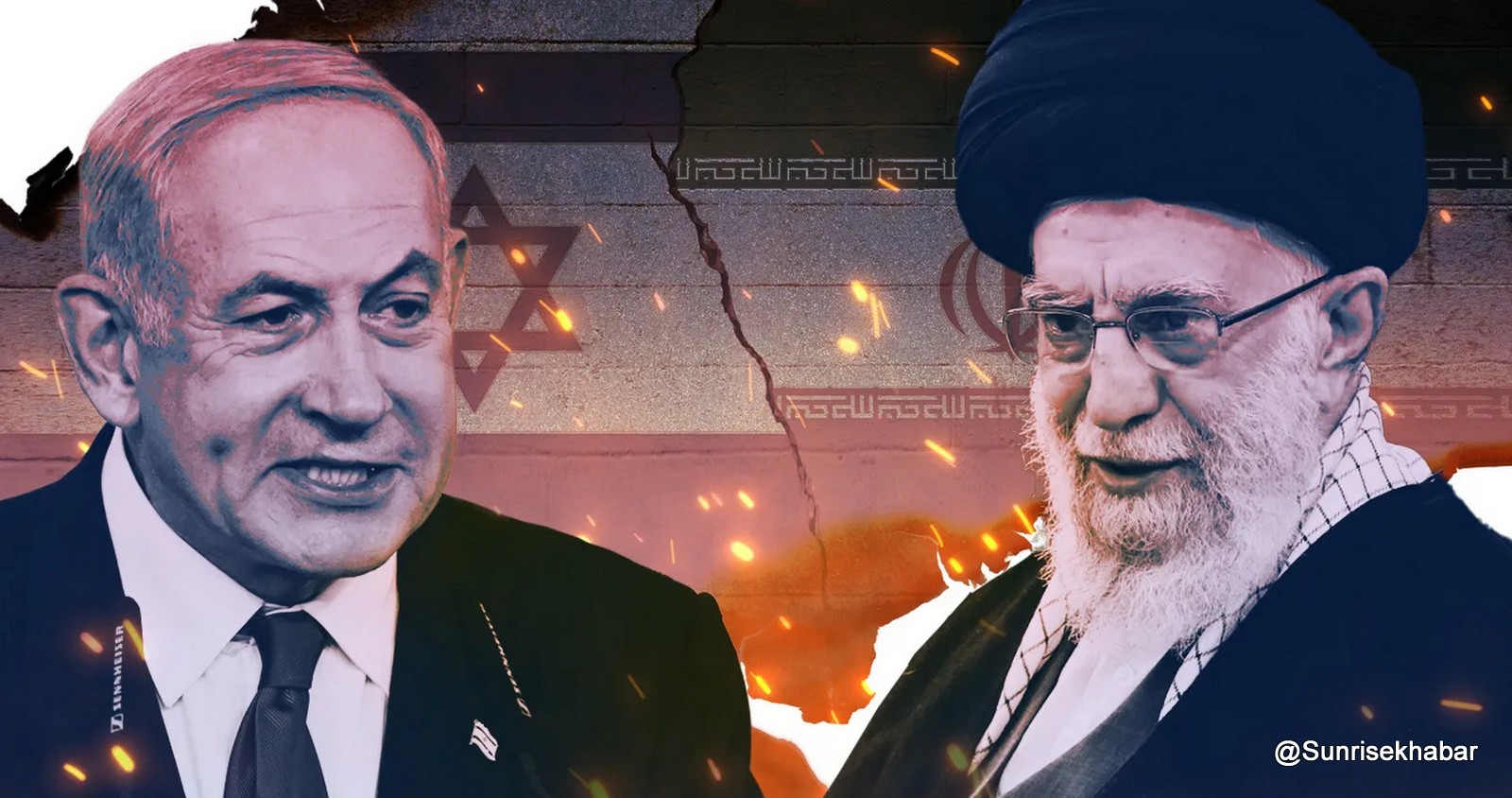
KATHMANDU: Iran and Israel have been in conflict for about three weeks. This dispute seems to have started with the Syria incident. On April 1st, when the Iranian Embassy in Syria was attacked by an airstrike, 11 people, including a senior commander of the Iranian Revolutionary Security Forces, were killed.
They all participated in the meeting held at the Damascus Embassy premises. Iran has accused Israel of carrying out the attack, but Israel has not claimed any responsibility for it. After the attack, the supreme leader of Iran, Ayatollah Ali Khamenei, said that Israel must be punished for its actions.
After the warning, Iran fired 330 missiles at Israel on the night of Saturday, April 13. Drone attacks also took place during this period. Now Israel has also warned to take revenge against Iran.
Tensions are rising due to this reaction of Iran and Israel. Both countries do not seem to be paying attention to resolving this dispute quickly. Instead, they are increasing the business by taking revenge. Also, these countries, which have indicated that they will face each other now, are once good friends.
In 1948, Iran recognized a country as a new nation on the world map. That country is Israel. Most of the Muslim majority countries did not care about this country that came into existence from among the Arab countries. But Iran is such a waste, which identified Israel.
At that time, Iran was ruled by the Pahlavi dynasty. This dynasty ruled for more than half a century. The Pahlavi dynasty supported America while Israel supported America. Palestine, in whose support Iran stands today, termed Iran's action as a disaster at that time.
Palestine also sees this as tacit international approval of the disaster. It is said that more than seven million Palestinians have been evicted from their land due to the formation of Israel.
Strengthening Israel-Iran relations During that period of the Cold War, the Iranian regime was supported by America. Along with this, Israel had the support of America and Europe. A large number of Jews were also living in Iran. Even today, after Israel, Iran has the largest number of Jews in Western Asia. According to the 1956 census in Iran, there were about 65,000 Jews living in Iran at that time.
After becoming a nation, Israel started trying to establish relations with other countries. Israel has established an embassy in Iran's capital, Tehran, while both countries have been appointing ambassadors for each other. Trade relations also increased and Iran soon became a major source of oil supplies for Israel.
Both started the pipeline in 1968 with the aim of sending Iranian oil to Israel and then to Europe.
But that relationship was not always continuous. In 1979, due to the Islamic Revolution, relations began to cool. Shah Mohammad Reza Pahlavi, who was in power in Iran, was forced to flee the country. At the same time, Ayatollah Ruhollah Khomeini, exiled from the country for years, returned to the country and took power in Iran.
After the Islamic Revolution in Iran, the relationship between the two countries began to sour. After this revolution, Iran, once called Persia, the land of the Persians, became the Islamic Republic. At that time, the new supreme leader of Iran, Khomeini, called the world powers "arrogant" and adopted the policy of caliphate against them.
He announced that he will stand against the regional allies of world powers who oppress Palestinians and others to fulfill their interests.
Saddam's army also attacked Iran. After the Islamic revolution, a Shiite ulema came to power. The neighboring country of Iraq was ruled by the Sunni dictator Saddam Hussein. Iran, which was going through a period of instability, was suddenly attacked by Saddam's army in September 1980.
America supported Iraq. At that time, Israel supported Iran. Saddam was getting help from America. Saddam hoped to win over Iran within a few days, but that did not happen. Iran's supreme leader Khomeini saw Saddam as an obstacle to the Islamic revolution. His army stood firm and continued the war in an attempt to defeat the Iraqi leader.
This war, which lasted for many years, could not reach any result. Neither Saddam could remove Khomeini from power nor Khomeini could remove Saddam from power. There was another interesting aspect of this war. Many reports have shown that the US, which supports Saddam, is secretly providing weapons to Khomeini's army. With the end of the eight-year war, the balance of West Asia changed.
A few years after this war, Saddam became a target of America, during the occupation of Kuwait in 1990. The Iranian ruler has called America the 'great devil', on the other hand, the relationship between Iran and Israel is also becoming bitter. A proxy war has started between the two.
The Iranian regime called America the 'Great Satan' and Israel the 'Little Satan'. Iran broke all ties with Israel. Citizens could no longer travel and flight services were canceled and the Israeli embassy in Tehran was converted into a Palestinian embassy.
The bitterness between Iran and Israel dates back to 1982. Relations between the two countries worsened after Israel was accused of providing financial support to political and armed groups in Syria, Iraq, Lebanon and Yemen. Since then, large demonstrations in support of the Palestinians have been held across Iran. In fact, Jerusalem is called Al Quds in Arabic.
Iran has been accused of supporting proxy networks in several countries in the region, including Lebanon, Syria, Iraq and Yemen. This group is known as the Axis of Resistance, which supports the Palestinian cause and considers Israel to be its main enemy.
These armed groups have also targeted Israel and the US military. Chief among these is Hezbollah in Lebanon, which was formed in 1982 to fight the Israeli occupation of southern Lebanon. This proxy war has been going on for the past few years.
Talking about recent developments, it started in the middle of the war between Hamas and Israel. Hezbollah is also involved in this war. He is continuously launching rocket attacks on northern Israel. Iran has also been accused of supporting the Houthi rebels. This organization is also continuously attacking Israel.
The latest conflict between Israel and Iran began on April 1. On this day, the Iranian embassy in Syria was attacked. At least 11 people have died in an attack on the Iranian consulate in Damascus, the capital of Syria.
A senior commander of the Al Quds Force of the Iranian Revolutionary Guards Corps (IRGC) was also killed. They were all attending a meeting at the Damascus embassy compound at the time of the attack.
Israel has not claimed responsibility for the attack, but it has only been accused of the attack. Iran has said that it will take revenge for this attack. After the attack, on the night of April 13, Iran launched a missile and drone attack on Israel.
It was claimed that more than 300 missiles were fired at Israel during this period. However, the US has claimed that almost all the attacks have failed. On the other hand, Israel has also threatened to respond to this attack. In such a situation, one can only guess how long this tension will last.




प्रतिकृया दिनुहोस